


















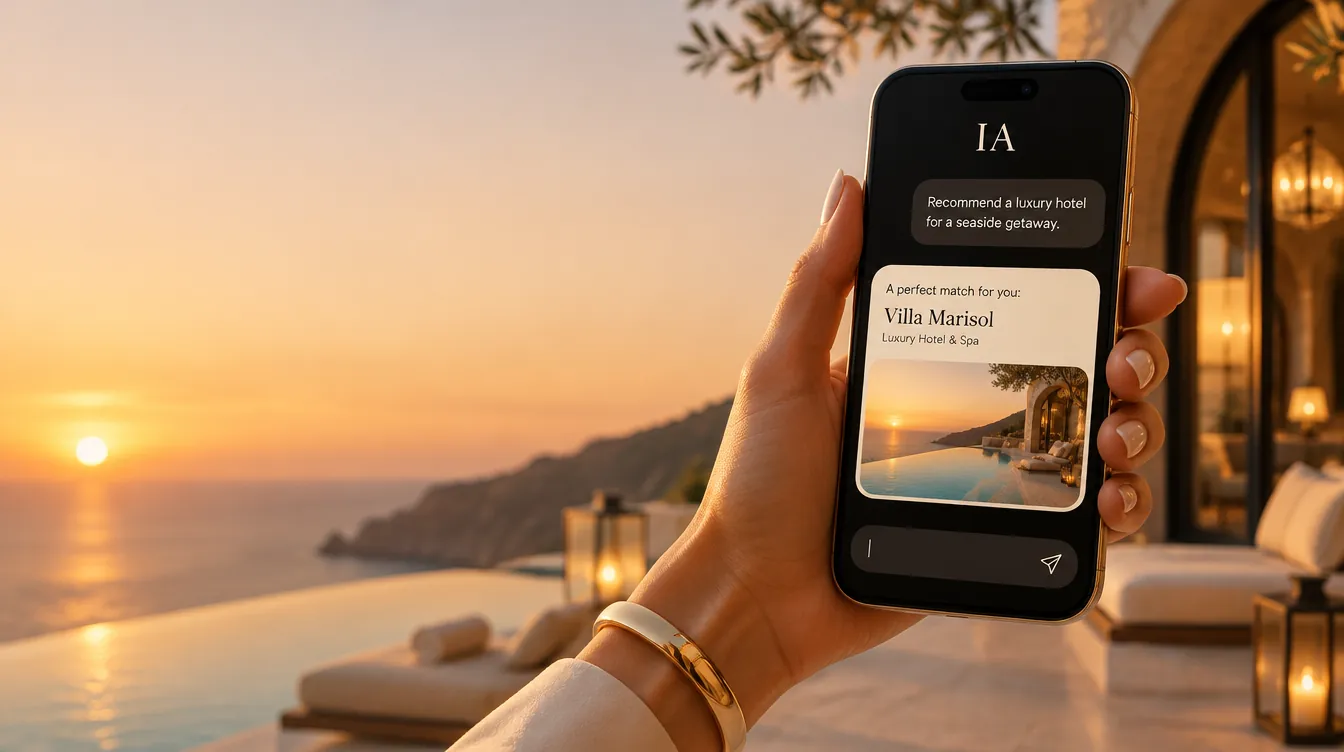
I use artificial intelligence to research every hotel I visit. It surprises me, it helps me and, sometimes, it gets things wrong. A new Global Hotel Alliance study confirms I am not the only one, and it carries a warning for luxury hotels.
Before every trip, one of the first things I do is ask an AI about the hotel I am going to. What its history is, which restaurants are worth trying, what has changed in recent years. Sometimes the answers surprise me with how complete they are. Other times, they surprise me with how wrong they are: more than once it told me about hotels that, according to it, were open, and in reality were not.
Even so, today it is one of my sources of information. And according to a recent study, the same is true for millions of travelers.
Travelers are already asking AI
Global Hotel Alliance’s (GHA) new trends report for 2027, released on November 18, surveyed 9,000 members of its GHA DISCOVERY program and puts numbers to what I have been experiencing: 81% of travelers expect to use tools like ChatGPT, Gemini or Claude to plan their trips next year. A year earlier, 62% said they had used them. And the biggest jump came from baby boomers, who went from 32% to 63%.
Almost half use it to build itineraries and research destinations. The hotel shortlist is already starting to be drawn up by AI.
They consult it, but they do not fully trust it yet
The report has a figure I find very honest: only 37% trust AI to recommend the right hotel, and just 4% would let it book on its own.
81%
will use AI to plan their trips in 2027
37%
trust it to recommend the right hotel
4%
would let it book on its own
Source: Global Hotel Alliance, 2027 traveler trends (9,000 respondents).
I can relate. I ask it everything too, but I make the final decision myself, cross-checking with other sources, with what the people I trust say and with my own experience. And when AI gets it wrong, as it did with those supposedly open hotels, it is not always the machine’s fault: often it is repeating the messy or outdated information it finds about that hotel.
Hotels are arriving late again
This is what worries me most. I see the same thing happening with AI that happened with social media: many hotels are arriving late. They wait to see what others do, for the topic to become established, and only then do they move. They do not take the initiative.
With social media, that delay was paid for with years of disadvantage against those who understood the change first. With AI it could be even faster, because travelers are already asking today.
And what travelers value has not changed. When GHA asked what makes a trip feel luxurious, regardless of price, the top answer was exceptional quality and attention to detail (52%). And 73% prefer hotels with personality over standardized offerings. All of that exists in the hotel, but if it is not told well, AI cannot recommend it.
My advice: step outside your box
If a decision-maker at a hotel asked me for a single piece of advice to start with tomorrow, I would tell them this: step outside your box and your circle. Find professionals who can help you analyze what is being said about your hotel, who is saying it and whether what is being said is relevant.
Because AI builds its answers from what is published about a hotel: reviews, press, expert voices, official data. If the information is outdated or contradictory, the error will reach the traveler. And if nobody relevant is talking about your hotel, AI has nowhere to get it from.

The Expert’s Take
Artificial intelligence is not going to replace hospitality, but it already decides which hotels enter the conversation.
I live it with every trip I prepare: AI helps me, saves me time and has also given me wrong information. That is exactly the opportunity for hotels. Those who take care of what is said about them, and who says it, will be the ones AI recommends with confidence.
The GHA report confirms it: AI inspires and organizes, but trust still wins the booking. My fear is that, as with social media, many hotels will realize it when it is already too late. This time, whoever waits for others to move first will be left out of the answer.
— Marcos Toscani
Have you already asked an AI about your next hotel? Did it get it right or wrong?
FAQ
How many travelers will use artificial intelligence to plan their trips in 2027?
According to Global Hotel Alliance’s 2027 trends report, 81% of travelers expect to use tools like ChatGPT, Gemini or Claude to plan their trips. A year earlier, 62% said they had used them.
Do travelers trust AI hotel recommendations?
Not entirely yet. Only 37% trust AI to recommend the right hotel, and just 4% would let it book on its own.
Why does AI get things wrong about a hotel?
Because it builds its answers from what is published about that hotel: reviews, press, expert voices and official data. If that information is old or contradictory, the error reaches the traveler.
What can a luxury hotel do to appear in AI answers?
Take care of what is said about it and who says it: check whether the information in circulation is up to date and relevant, and rely on professionals and expert voices who tell its story well.
Cover image created with artificial intelligence for Experto en Hoteles.